There are some places in Country Queensland that are more than just a bridge, a road or a crossing.
They become landmarks.
They become part of the landscape.
And after nearly 140 years, they become part of the local story.
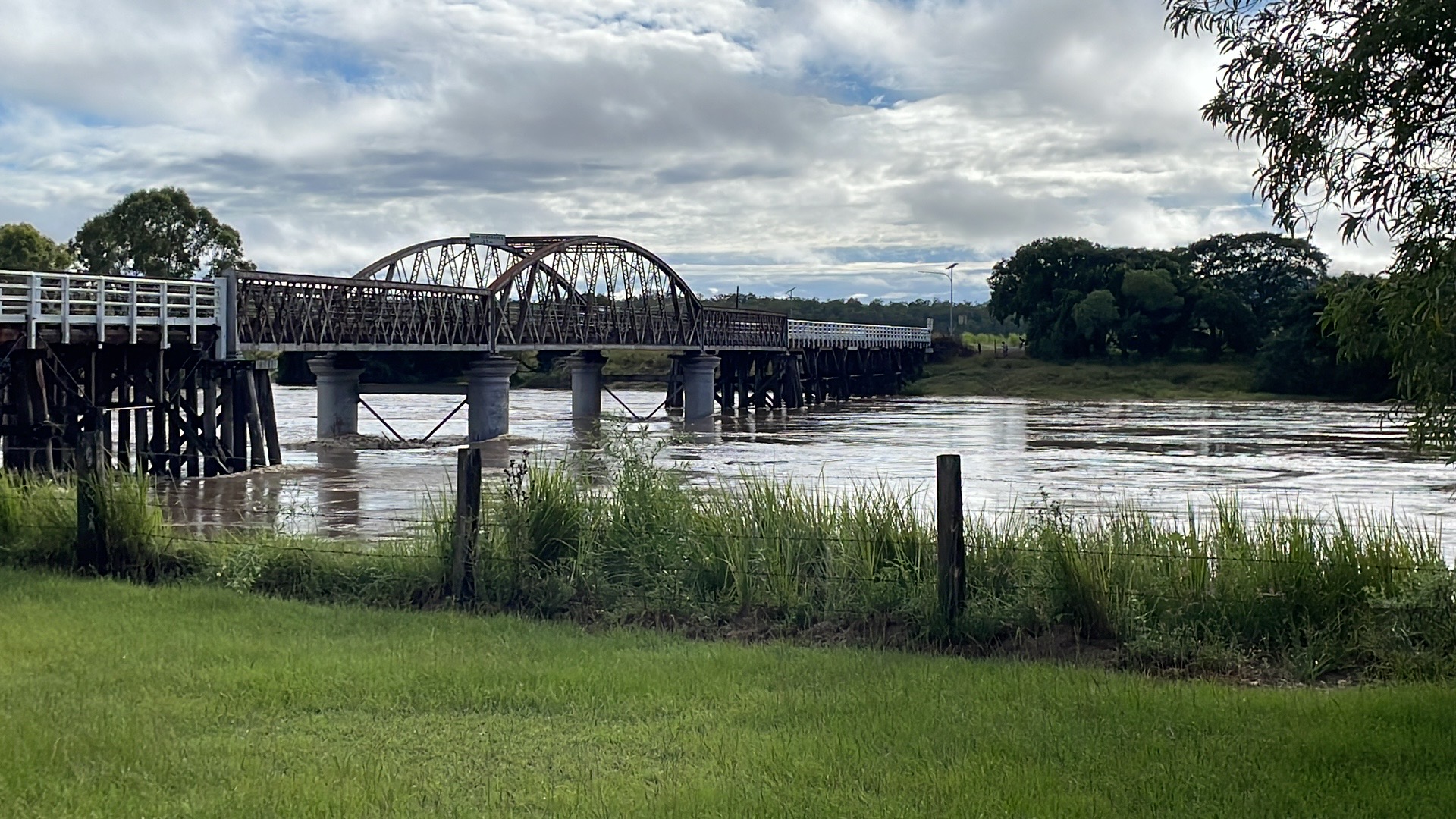
Standing proudly across the Mary River at Miva, Dickabram Bridge is certainly one of those places.
Completed in 1886, this remarkable old bridge has survived floods, changing transport needs, the coming and going of the railway and generations of Queensland weather.
And perhaps one of the most remarkable parts of its story is this:
It took less than two years to build.
Keeping the old girl going for nearly 140 years has proved to be a rather bigger job!
Before Dickabram Bridge
Today, crossing the Mary River is something most of us barely think about.
In the late 1800s, it was a very different story.
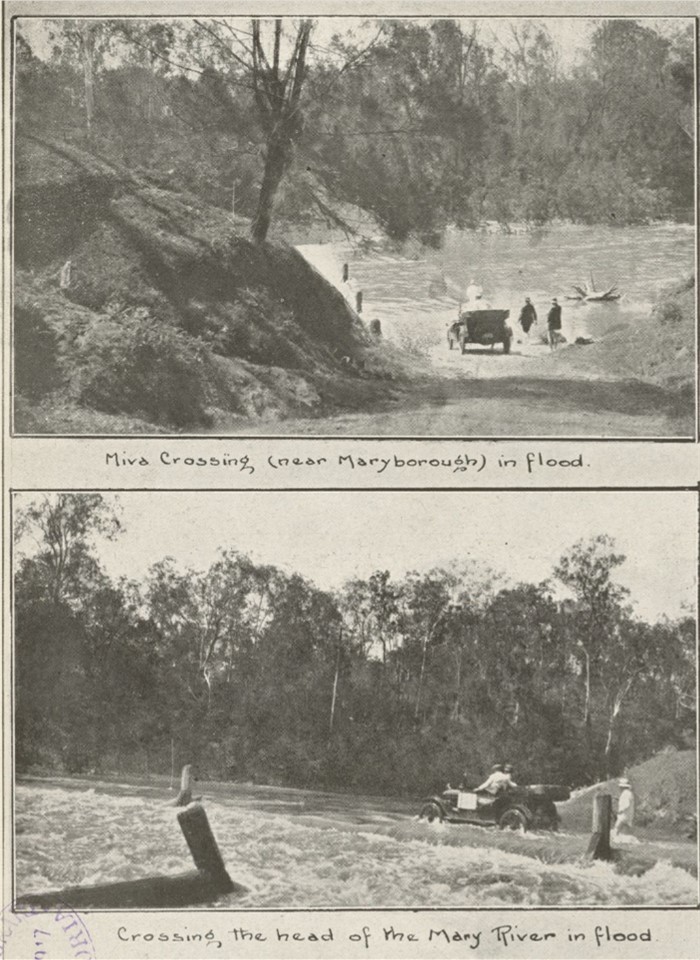
Before Dickabram Bridge, a punt provided the crossing. The first road bridge was opened in 1878, giving the developing communities around Miva a much-needed connection across the river.
Unfortunately, the Mary River had other ideas.
The bridge was damaged by flooding and, in February 1880, it was washed away.
A replacement was constructed, but it too met the same fate.
In October 1882, the second bridge was swept away by floodwaters.
Clearly, the next crossing needed to be built to a rather higher standard.
And that's when the Dickabram Bridge we know today began to take shape.
Building a bridge to last
The bridge was designed by Henry Charles Stanley, Chief Engineer of Railways, and construction was undertaken as part of the railway extension from Theebine towards Kilkivan.
The historical information board at Dickabram Park tells us that the bridge was completed in May 1886.
It stands approximately 23 metres (70 feet) above the Mary River and is just over 200 metres long.
For the 1880s, this was an impressive piece of engineering.
The bridge was designed to carry both rail and road traffic, with a single railway track running alongside the roadway.
Its enormous river piers were made from cast iron cylinders filled with concrete, while other sections incorporated substantial timber construction and metal trusses.
And remember what building a structure like this meant in 1886.
No modern cranes.
No excavators.
No concrete pumps.
Just engineering skill, hand tools, machinery of the day and an enormous amount of hard physical labour.
The result was a bridge that would become one of Queensland's most remarkable surviving examples of its type.
A bridge and a busy little township
Dickabram Bridge wasn't simply built to provide a crossing.
It was part of the expanding railway network, and the railway transformed the district.
The railway reached Dickabram in 1886, with the line to Kilkivan opening later that year. The bridge became an important link for moving people, stock and goods through the region. Gympie Regional Council
For a time, Dickabram was a thriving little township.
The historical board at the bridge records that during the 1880s there was a post office, hotel, butcher shop, blacksmith and drapery business.
The Dickabram Post Office operated from 20 December 1884 until 31 October 1886.
A newspaper description from May 1886 paints a wonderful picture of the settlement, describing around fifty people living there, several stores and no fewer than three public houses.
Now, that sounds like a pretty lively little Queensland town!
Even getting the road onto the bridge was a drama
You might think that once the bridge itself was built, the job was finished.
Not quite.
There were lengthy disputes over who should pay for and construct the road approaches.
The bridge had been designed to accommodate ordinary road traffic as well as the railway, but the approaches weren't completed immediately.
Local residents were understandably frustrated.
For people living in the district, this wasn't simply an inconvenience. When the Mary River flooded, communities could be cut off for extended periods, making it difficult to move stock and get produce to markets.
Eventually, the dispute was resolved and the road approaches were completed.
It seems that even in the 1880s, finishing the bridge and finishing the project weren't necessarily the same thing! Gympie Library
Dickabram Bridge takes to the skies
This is one of my favourite parts of the story — and one I was particularly keen to confirm.
During World War II, Maryborough was the flying base for a RAAF Wireless Air Gunner School, equipped with Wackett aircraft.
According to the historical information board at Dickabram Park, aircraft from the school would fly south almost daily to a point around Miva, using Dickabram Bridge as a visual navigation point.
Imagine seeing that from the ground!
A huge railway bridge standing high above the Mary River became a landmark for aircraft flying over the district.
The information board even records an extraordinary story of an aircraft apparently flying so low that it appeared to be heading underneath the bridge before suddenly rising above the treetops.
And apparently the bridge's aviation career didn't finish there.
The board says that F-111 aircraft were later believed to have used the bridge as a navigation point or target.
So Dickabram Bridge wasn't only a landmark for travellers on the ground.
It was a landmark from the sky as well.
A tragic story – and a little bit of local folklore
Like many old Queensland landmarks, Dickabram Bridge has its share of stories.
The historical board records that it is rumoured there were three deaths during construction.
Two graves located close to the bridge are believed to belong to construction workers.
The third story is rather more haunting.
According to local folklore, a worker was barrowing concrete to fill one of the large steel cylinders forming the bridge's river piers.
It is said that he wheeled his barrow too close to the edge, fell into the cylinder and disappeared.
The other workers apparently didn't realise what had happened and continued filling the cylinder with concrete.
The story has become part of Dickabram's local folklore, and the historical board goes one step further.
It records stories from fishermen who, while fishing for cod near the bridge on cold winter nights, have claimed to hear tapping and a voice moaning from that very same cylinder.
Is it fact?
Is it folklore?
We'll probably never know.
But I suspect that if you're standing beside those enormous bridge piers on a very quiet winter evening, you'll be listening just a little more carefully!
The Mary River fights back
If the earlier bridges being washed away didn't make it clear, the Mary River has always been a force to be respected.
Dickabram Bridge stands approximately 23 metres above the river, putting the deck above almost all recorded flood levels.
But the river has certainly tested it.
The historical board records that floodwater came within around 15 feet of the decking in 1887.
In 1893, the flood level reached 23.08 metres and covered the bridge.
In 1955, water reached 21.84 metres, with floodwater splashing through the decking.
Other significant flood levels were recorded in 1956, 1968, 1974, 1992 and 1999.
And yet the old bridge remained.
Even the devastating Mary River flooding in 2022 provided another reminder of just how powerful this river can be, while Dickabram Bridge continued to stand. ABC News
From railway crossing to heritage landmark
Eventually, the railway's importance declined.
The little Dickabram township disappeared, and the railway line eventually ceased operating.
But the bridge remained.
Today, it is recognised as an important piece of Queensland engineering and transport heritage. Gympie Regional Libraries have preserved several dedicated histories of Dickabram Bridge, including Dickabram Bridge Centenary 1886–1986, Dickabram Bridge 125 Years 1886–2011 and The Dickabram Bridge Remembers 1886–2011. Gympie Library
And, thankfully, its story continues to be told.
Keeping the old girl going
A bridge built in 1886 was never going to make it to the twenty-first century without needing some serious maintenance.
Dickabram Bridge has undergone various repair and rehabilitation programs over the decades.
More recent restoration work has involved substantial repairs to the ageing structure, with the bridge requiring extended closures while major rehabilitation work was undertaken.
A further significant program began in 2025, with work aimed at replacing deteriorating components and preserving the heritage-listed structure for the future. Restoration work has been ongoing for some time, and the complexity of working on a 140-year-old bridge over the Mary River means it isn't a quick job. ABC News
And this brings us back to my favourite comparison:
The original bridge took less than two years to build.
Keeping it standing for nearly 140 years has taken considerably longer!
To be fair, we're not exactly comparing apples with apples.
The men who built Dickabram Bridge in 1886 weren't trying to preserve a 140-year-old heritage structure while meeting modern safety, engineering and environmental requirements.
Still...
I think the old Queensland workers might have wondered what was taking so long! 😊
A little piece of Country Queensland
Today, Dickabram Bridge sits quietly beside the Mary River at Miva, with Dickabram Park providing a place for visitors to stop and explore.
And there is plenty to see beyond the bridge itself.
The river and surrounding vegetation provide habitat for birds, butterflies, fish, reptiles and other wildlife, including some of the Mary River's special inhabitants such as the Mary River cod, Mary River turtle and Queensland lungfish.
But for me, the real attraction is the bridge.
Because when you stand there and look at those enormous piers and the old structure stretching across the river, you aren't simply looking at an old bridge.
You're looking at a piece of Country Queensland history.
A bridge that replaced two crossings washed away by the Mary River.
A bridge that helped a little township grow.
A bridge that carried trains and vehicles.
A bridge that became a navigation landmark for aircraft during wartime.
A bridge that has survived enormous floods.
And a bridge that, nearly 140 years later, is still standing.
Karen's Country Queensland Tip 🌿
If you're travelling through Miva, don't just drive across Dickabram Bridge and keep going.
Stop.
Take a wander through Dickabram Park.
Read the history boards.
Look at the river.
Look at those enormous bridge piers.
And imagine what this place must have looked like in 1886, when people were building this extraordinary structure with the tools and technology of the time.
Because sometimes the most fascinating places in Country Queensland aren't the biggest attractions.
They're the quiet places that have been sitting there for generations, telling their stories to anyone who takes the time to stop and listen.
And Dickabram Bridge certainly has a story to tell.
Sources & acknowledgements
Historical information for this article was drawn from the historical interpretation boards at Dickabram Park, Miva; Gympie Regional Libraries' local-history publications; Gympie Region heritage information; and Queensland Government/Department of Transport and Main Roads information.
Dickabram Bridge, Miva – photographed by Karen Heij, January 2022